Colocasia
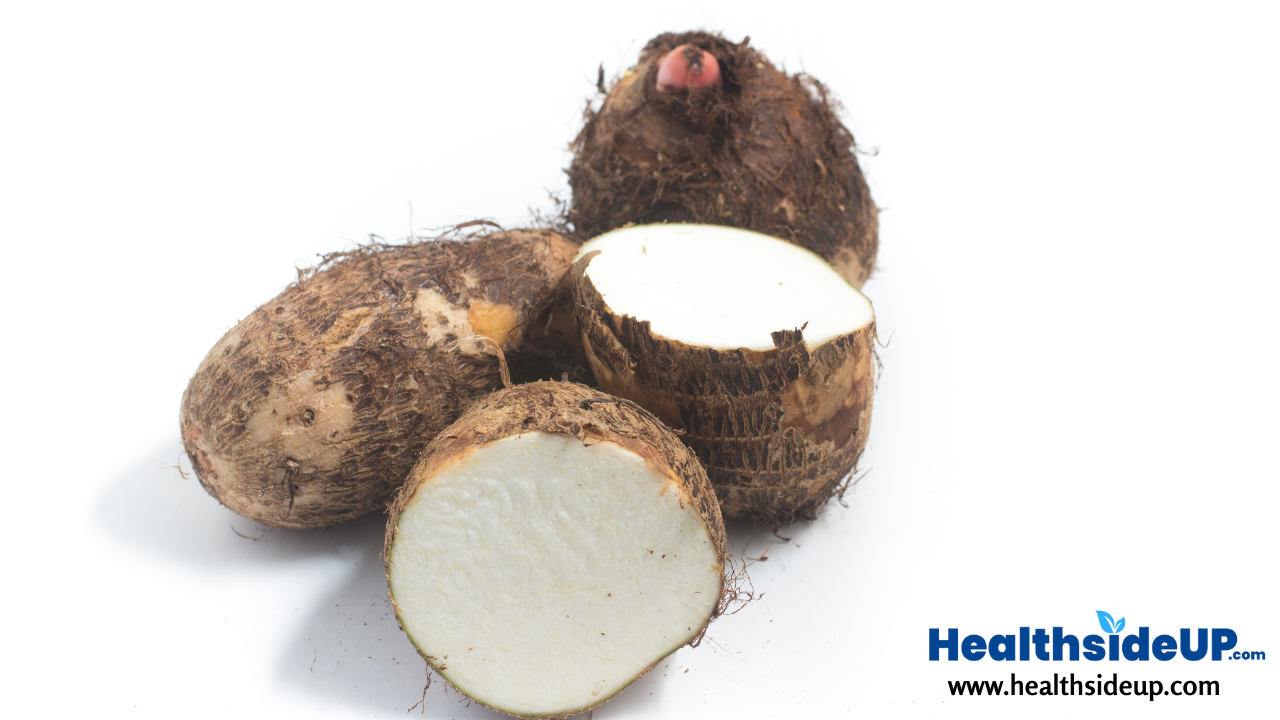
Colocasia esculenta is the scientific name for the taro plant. Colocasia, commonly known as taro, is a tropical plant that produces starchy tubers. These tubers are a staple food in many parts of the world, particularly in Southeast Asia and the Pacific. Taro tubers are typically brown or purplish on the outside and white, cream, or pale purple on the inside. They have a rough, hairy texture on the outside and a starchy, slightly slimy texture on the inside when cooked.
Nutritional Content :
Taro is relatively low in calories, with approximately 142 calories per 100 grams.
It is a good source of complex carbohydrates, providing about 34 grams of carbohydrates per 100 grams. These carbohydrates provide a steady source of energy.
Taro contains dietary fiber, which aids in digestion and helps regulate blood sugar levels. It provides approximately 2.8 grams of fiber per 100 grams.
While taro is not particularly high in protein, it still contributes about 1 gram of protein per 100 grams.
Taro contains various vitamins, including vitamin C, vitamin B6, and folate. Vitamin C is an antioxidant that supports the immune system, while vitamin B6 is important for metabolism and brain health.
Taro is a good source of several minerals, especially potassium and magnesium. Potassium is essential for maintaining proper heart and muscle function, and magnesium is important for bone health and nerve function.
Taro is low in fat, with less than 0.2 grams of fat per 100 grams.
Health Benefits of Taro:
The complex carbohydrates in taro provide a steady source of energy, making it a good choice for athletes and those who engage in physically demanding activities.
The fiber in taro can promote digestive health by preventing constipation and supporting a healthy gut.
Taro is a nutrient-dense food, providing essential vitamins and minerals with relatively few calories.
The potassium content in taro helps regulate blood pressure and may reduce the risk of cardiovascular diseases.
Taro contains minerals like magnesium and calcium, which are important for bone health.
Taro also contains phytonutrients and antioxidants that may have anti-inflammatory properties.
Taro is naturally gluten-free, making it a suitable option for individuals with gluten sensitivity or celiac disease.
It’s worth noting that while taro has several nutritional benefits, it should be prepared and cooked properly to minimize the presence of oxalates, which can be harmful in excessive amounts. Additionally, the method of preparation can impact its nutritional profile, so healthier cooking methods like boiling or steaming are recommended over frying. Incorporating taro into a balanced diet can provide these nutritional benefits and contribute to a well-rounded and healthy eating plan.