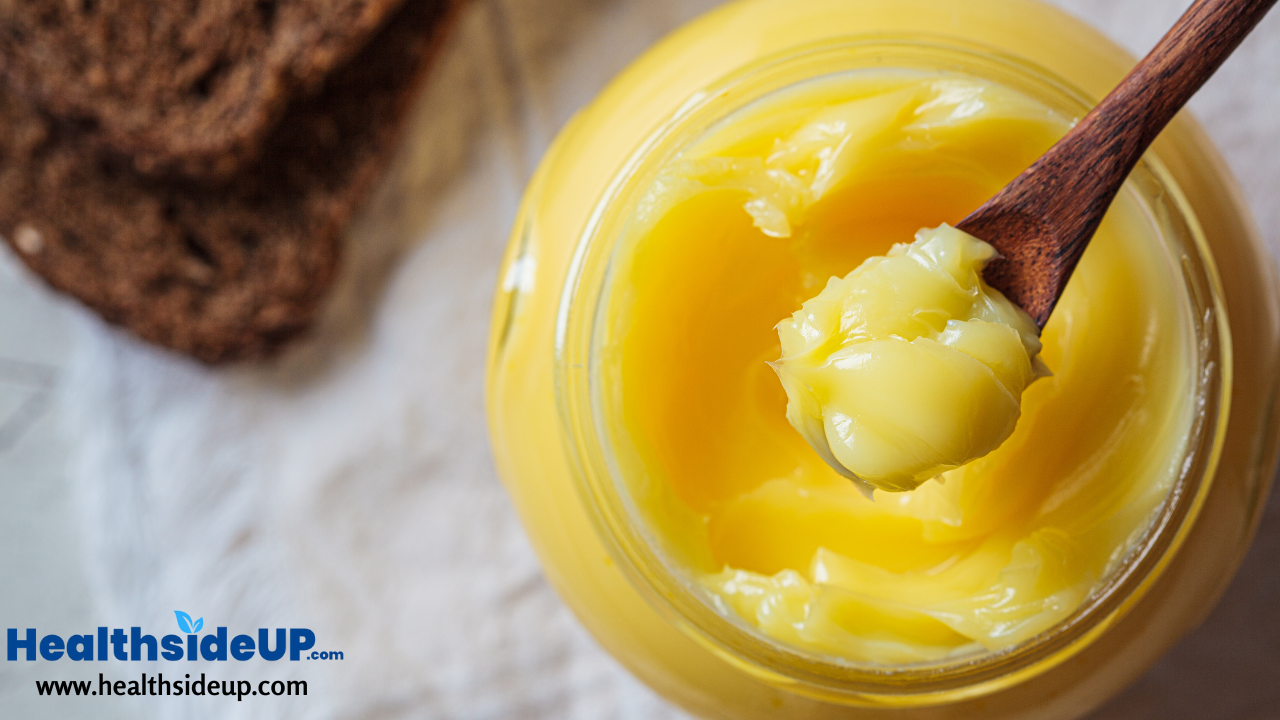
Cow’s Ghee: The Golden Elixir
Cow’s Ghee, also known as clarified butter, is a popular cooking fat with a rich history in Indian cuisine and Ayurveda. It’s made by simmering butter to remove the water content and separate the milk solids, leaving behind the pure butterfat. Ghee has several nutritional benefits and culinary uses.
Contents of Cow’s Ghee:
Ghee is calorie-dense, providing approximately 112-120 calories per tablespoon. It’s an excellent source of energy.
Ghee is almost entirely composed of fats, including saturated fats, monounsaturated fats, and polyunsaturated fats. Saturated fat makes up the majority of its fat content.
Ghee contains fat-soluble vitamins, such as vitamin A, D, E, and K, as these vitamins are preserved during the clarification process. However, the specific vitamin content can vary depending on the source and preparation of the ghee.
Ghee contains short-chain fatty acids, including butyric acid, which may have some health benefits, particularly for the digestive system.
Benefits of Ghee:
One of the plus point of Ghee, it has a high smoke point (around 450°F or 232°C), making it a stable cooking fat suitable for high-heat cooking methods like frying and sautéing.
Ghee is almost completely free of lactose and milk proteins because these components are removed during the clarification process. This makes it suitable for many people with lactose intolerance or dairy allergies.
Ghee has a distinctive nutty, rich flavor and aroma that can enhance the taste of dishes in both savory and sweet recipes.
The healthy fats in ghee can aid in the absorption of fat-soluble vitamins and nutrients from other foods.
In Ayurveda, Cow ghee is considered a beneficial food with various health-promoting properties. It’s believed to balance the body’s doshas (Vat, Pitta, Kaff) and support overall well-being.
Ghee is sometimes used to promote healthy digestion and soothe the digestive tract. Butyric acid in ghee may support gut health.
Ghee is applied topically in some cultures for its moisturizing properties, used for skin and hair care.
Some research suggests that ghee may have antioxidant properties, although more studies are needed to confirm its role.
It’s important to note that while ghee has certain nutritional benefits and is considered a healthier cooking fat compared to some alternatives, it is still calorie-dense and should be consumed in moderation. Its high saturated fat content should be considered in the context of an individual’s overall diet and health.
In India various sweets can not became without Ghee ; eg. Ladu, Ghivar, Ghari, Sutarfeni etc. It is the main ingredient in cooking. Various Indian dishes can not be fulfilled without it’s touch.
For those interested in incorporating ghee into their diet, it is recommended to use high-quality, clarified butter and consult with a healthcare provider, especially if you have specific dietary concerns or medical conditions.