Gram Flour Delights: Exploring Gujarati Culinary Wonders with Dhokla, Khandvi, and More
Gujarati cuisine is renowned for its diverse flavors, vegetarian dishes, and a blend of sweet, savory, and spicy tastes. Here are a few popular Gujarati dishes along with their recipes:
Dhokla:

Ingredients:
1 cup gram flour (besan)
1/2 cup yogurt
1 teaspoon ginger-green chili paste
1/2 teaspoon turmeric powder
1 teaspoon sugar
1 tablespoon lemon juice
1 teaspoon fruit salt (eno)
Salt to taste
For Tempering:
2 tablespoons oil
1 teaspoon mustard seeds
1 teaspoon sesame seeds
Few curry leaves
2-3 green chilies (slit)
A pinch of asafoetida (hing)
2 tablespoons water
Fresh coriander leaves for garnish
Grated coconut for garnish (optional)
Instructions:
In a bowl, mix gram flour, yogurt, ginger-green chili paste, turmeric powder, sugar, lemon juice, and salt. Add water to make a smooth batter.
Grease a dhokla plate or a shallow dish. Add fruit salt to the batter and mix gently. Pour the batter into the plate.
Steam the batter for 15-20 minutes until a toothpick inserted comes out clean. Allow it to cool slightly.
Cut the dhokla into squares or diamonds.
For tempering, heat oil in a small pan. Add mustard seeds, sesame seeds, curry leaves, green chilies, and asafoetida. Add water and let it simmer for a minute.
Pour the tempering over the dhokla.
Garnish with chopped coriander leaves and grated coconut.
Nutritional Content (per serving):
Calories: Approximately 150-200 calories per serving (varies based on size and ingredients)
Protein: 5-8 grams
Carbohydrates: 20-25 grams
Fat: 5-8 grams (mostly from healthy oils used in tempering)
Health Benefits:
Rich in Protein: Gram flour used in Dhokla is a good source of plant-based protein, aiding in muscle repair and growth.
Low in Saturated Fat: Dhokla, especially when steamed and not fried, is low in unhealthy fats, making it heart-friendly.
Good Source of Fiber: Gram flour contains dietary fiber that aids digestion, promotes satiety, and helps maintain a healthy digestive system.
Vitamins and Minerals: Dhokla often contains added spices and herbs, providing various vitamins, minerals, and antioxidants.
Probiotic Benefits: Fermented Dhokla can promote gut health due to the presence of beneficial bacteria resulting from the fermentation process.
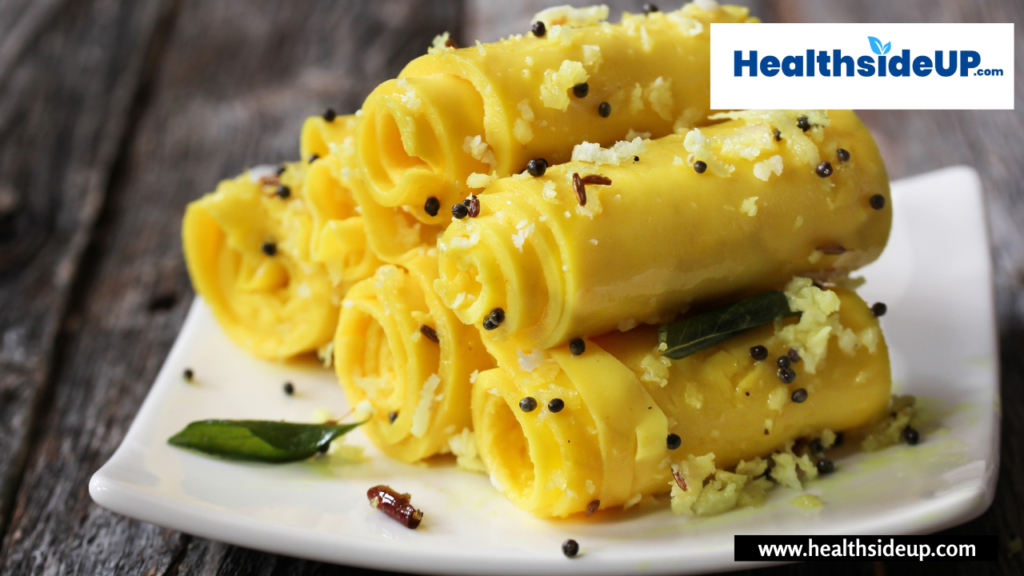
Khandvi:
Ingredients:
1 cup gram flour (besan)
1 cup yogurt
1 1/2 cups water
1/2 teaspoon turmeric powder
1 teaspoon ginger-green chili paste
Salt to taste
For Tempering:
2 tablespoons oil
1 teaspoon mustard seeds
1 teaspoon sesame seeds
Few curry leaves
A pinch of asafoetida (hing)
Fresh coriander leaves for garnish
Grated coconut for garnish (optional)
Instructions:
In a bowl, mix gram flour, yogurt, water, turmeric powder, ginger-green chili paste, and salt to form a smooth batter.
Heat the batter in a non-stick pan on medium heat, stirring continuously, until it thickens and doesn’t stick to the sides of the pan.
Quickly spread a thin layer of the batter onto a clean surface or the back of a plate.
Allow it to cool slightly, then cut it into strips and roll them tightly.
Arrange the rolls on a serving dish.
For tempering, heat oil in a small pan. Add mustard seeds, sesame seeds, curry leaves, and asafoetida. Pour the tempering over the arranged rolls.
Garnish with chopped coriander leaves and grated coconut.
Nutritional Content (per serving):
Calories: Approximately 150-200 calories per serving (varies based on portion size and ingredients)
Protein: 4-6 grams
Carbohydrates: 15-20 grams
Fat: 8-10 grams (mostly from tempering and added ingredients)
Health Benefits:
Gram Flour Nutrition: Being the primary ingredient, gram flour contributes to the protein and fiber content, supporting muscle health and aiding digestion.
Low Glycemic Index: Khandvi is relatively low on the glycemic index, which helps in better blood sugar control and may be suitable for individuals managing diabetes when consumed in moderation.
Healthy Fats: The tempering used in Khandvi often includes beneficial fats from mustard seeds, sesame seeds, and curry leaves, providing essential nutrients and antioxidants.
Complex Carbohydrates: The gram flour used in Khandvi provides complex carbohydrates, offering sustained energy and preventing blood sugar spikes.
Vitamins and Minerals: Depending on the tempering and added ingredients like curry leaves, Khandvi can offer additional nutrients like vitamins A, C, and K, as well as iron and calcium.