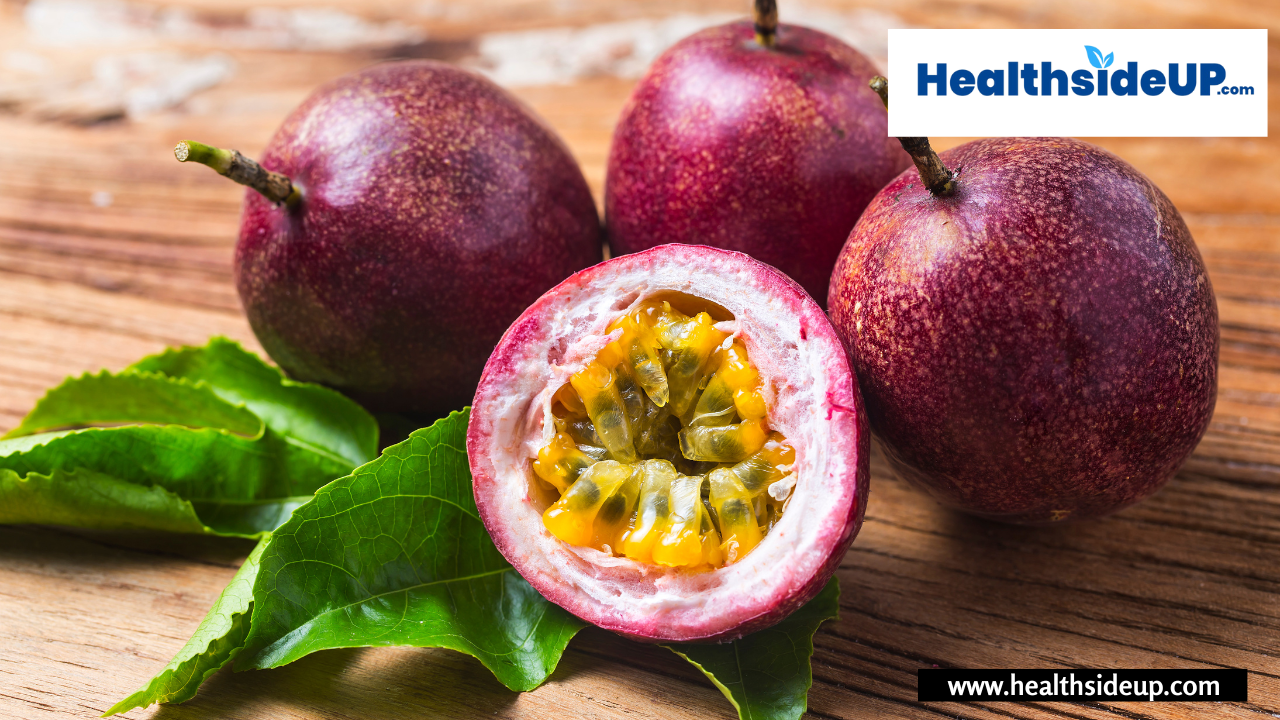
Passion fruit
Passion fruit is a tropical fruit known for its distinctive sweet and tangy flavor, as well as its unique appearance. Passion fruit is scientifically known as Passiflora edulis. The fruit is typically round or oval and can vary in size from about the size of a plum to that of a large egg. It has a tough outer rind that can range in color from dark purple to yellow or red. Inside, it contains a jelly-like pulp filled with numerous small, edible seeds. It’s very aromatic and can be quite strong in taste. There are several different varieties of passion fruit, with the two most common being purple passion fruit and yellow passion fruit. Purple passion fruit is more widely available and tends to have a more intense flavor, while yellow passion fruit is sweeter and less tart.
Nuritional Content with Benefits :
The high content of antioxidants in passion fruit helps combat free radicals, reducing the risk of chronic diseases and oxidative stress.
Vitamin C is essential for a healthy immune system and is important for skin health. Passion fruit provides a significant portion of your daily vitamin C needs.
The fruit is high in dietary fiber, which aids digestion, promotes regular bowel movements, and can help manage weight by increasing feelings of fullness.
The fiber, potassium, and antioxidants in passion fruit may contribute to heart health by reducing blood pressure, lowering cholesterol levels, and improving overall cardiovascular function.
The beta-carotene in passion fruit is good for eye health and can help reduce the risk of age-related macular degeneration.
The combination of vitamin C and antioxidants can contribute to healthy, glowing skin by reducing the signs of aging and supporting collagen production.
Vitamin C is well-known for its immune-boosting properties, and passion fruit can help strengthen your immune system.
The high fiber content helps control appetite and may assist in weight management by promoting a feeling of fullness.
Some studies suggest that passion fruit may have benefits for individuals with asthma due to its anti-inflammatory properties.
The antioxidants in passion fruit may help reduce the risk of certain types of cancer by neutralizing free radicals that can damage DNA and lead to cancerous changes.
It’s important to note that the nutritional content and health benefits can vary depending on the variety and ripeness of the passion fruit. To enjoy these health benefits, you can consume passion fruit fresh, in smoothies, fruit salads, or as a juice. Including it in your diet can be a tasty and nutritious way to support your overall health.