Radish/Mula
Mula/Radishes are small, crunchy root vegetables that belong to the Brassicaceae family, which also includes other well-known vegetables like broccoli, cauliflower, and cabbage. It’s scientific name is Raphanus sativus.They are widely consumed in various cuisines and come in different shapes, sizes, and colors. Radishes come in various varieties, each with its own distinctive flavor and appearance. Common types of radish are as follows.
Red Radishes: These are the most common and well-known radishes, with a bright red skin and a white, crispy flesh. They have a peppery taste.
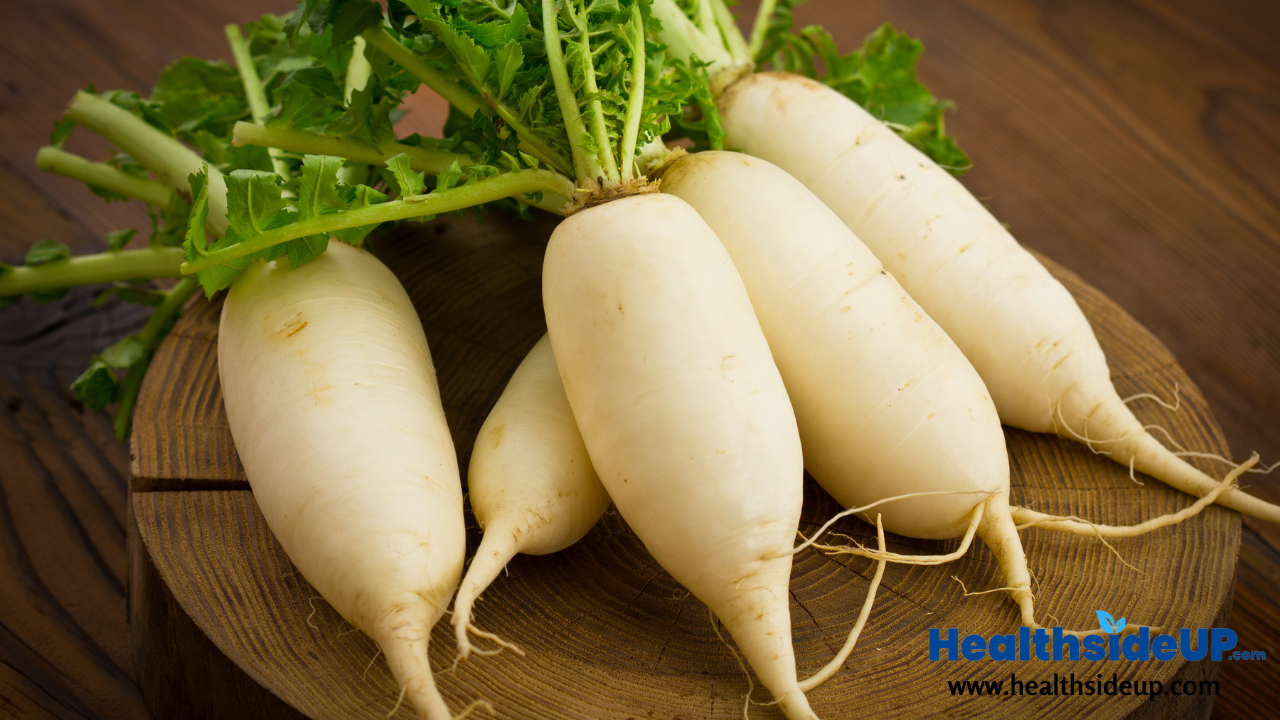
Daikon Radishes: Also known as white radishes or mooli, daikon radishes are larger and milder in flavor than red radishes. They are often used in Asian dishes.
Black Radishes: These radishes have a black or dark brown skin and a crisp, white interior. They have a stronger, peppery flavor.
Watermelon Radishes: These radishes are known for their striking appearance, with green and white skin and a bright pink or red interior. They have a mild, sweet flavor.
French Breakfast Radishes: These radishes are elongated and have a red top and white bottom. They are often milder in flavor compared to regular red radishes.
Cherry Belle Radishes: Small, round, and bright red, these radishes have a crisp texture and a peppery bite.
Nutritional Content:
Radishes are low in calories and provide various essential nutrients. A typical serving of radishes (about 100 grams) contains approximately 16 calories.
Radishes are primarily composed of carbohydrates, with around 3-4 grams of carbs per 100 grams.
They contain a small amount of dietary fiber, which can aid in digestion.
Radishes are a good source of vitamin C, as well as small amounts of vitamin B6, folate, and other vitamins.
They provide minerals like potassium, calcium, and magnesium.
Radishes contain various phytonutrients and antioxidants, including glucosinolates, which may have health benefits.
Health Benefits:
Radishes are a low-calorie food, making them a healthy choice for those looking to manage their weight.
They contain antioxidants that help protect the body from free radical damage.
The dietary fiber in radishes can support a healthy digestive system and regular bowel movements.
Radishes are a good source of vitamin C, which is essential for a healthy immune system and skin.
Radishes have a high water content, contributing to hydration.
Some compounds in radishes, particularly glucosinolates, have been studied for their potential cancer-fighting property.
The low glycemic index of radishes may help regulate blood sugar levels.
Culinary Use:
Radishes are a versatile vegetable and can be enjoyed in salads, sandwiches, pickles, and as a crunchy snack. Their peppery flavor adds a delightful kick to many dishes, and their nutritional benefits make them a healthy addition to a balanced diet.