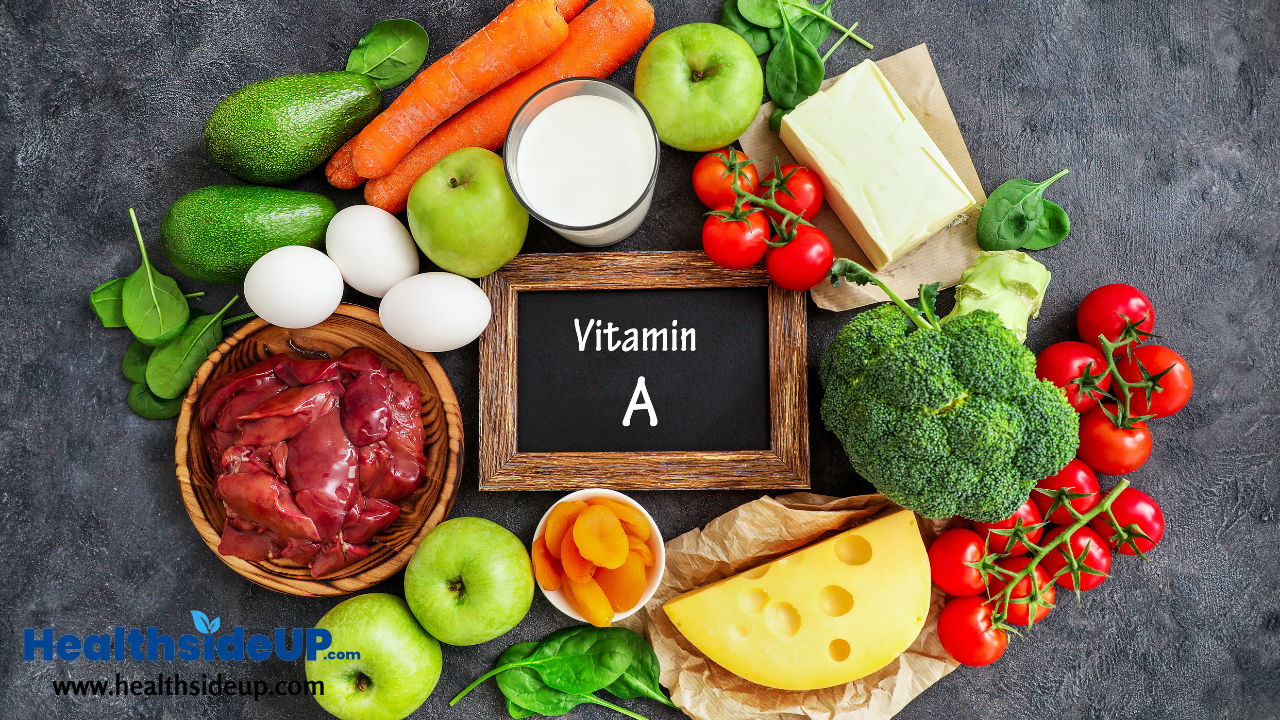
Vitamin A
Vitamin A is a fat-soluble vitamin that plays a crucial role in various aspects of human health. It is essential for maintaining good vision, a strong immune system, and healthy skin. There are two main forms of vitamin A found in the diet one is Retinoids and another is Carotenoids. Retinoids are preformed vitamin A compounds that are found in animal products. The most well-known retinoid is retinol, which is found in liver, fish, and dairy products. Retinoids are readily absorbed and used by the body. And Carotenoids are provitamin A compounds found in plant-based foods. The most common carotenoid is beta-carotene, which is found in carrots, sweet potatoes, and other colorful fruits and vegetables. The body can convert some carotenoids into active vitamin A.
Functions and benefits of vitamin A:
Vitamin A is essential for maintaining good vision, especially in low-light conditions. It is a key component of rhodopsin, a protein in the retina that helps you see in the dark.
Vitamin A plays a vital role in supporting the immune system by helping the body resist infections and diseases. It is involved in the production and function of white blood cells.
Vitamin A is important for the health and appearance of the skin. It can help with conditions like acne and promote healthy skin cell production.
It is important for both male and female reproductive health, as it is involved in the development of sperm and the health of the placenta during pregnancy.
Adequate vitamin A is necessary for proper bone growth and development.
Vitamin A is involved in cell growth, differentiation, and development in various tissues and organs in the body.
It’s important to consume an adequate amount of vitamin A in your diet, but it’s also essential not to overconsume it, as excessive intake of vitamin A can be toxic. The recommended daily allowance (RDA) for vitamin A varies by age and sex, but for adult men and women, it’s typically around 900 micrograms of retinol activity equivalents (RAE) per day for men and 700 micrograms RAE per day for women.
Good dietary sources of vitamin A include liver, fish, dairy products, fortified cereals, and a variety of fruits and vegetables, especially those that are orange, yellow, and green. If you’re concerned about your vitamin A intake, it’s best to consult with a healthcare professional or a registered dietitian to ensure you are meeting your nutritional needs.