
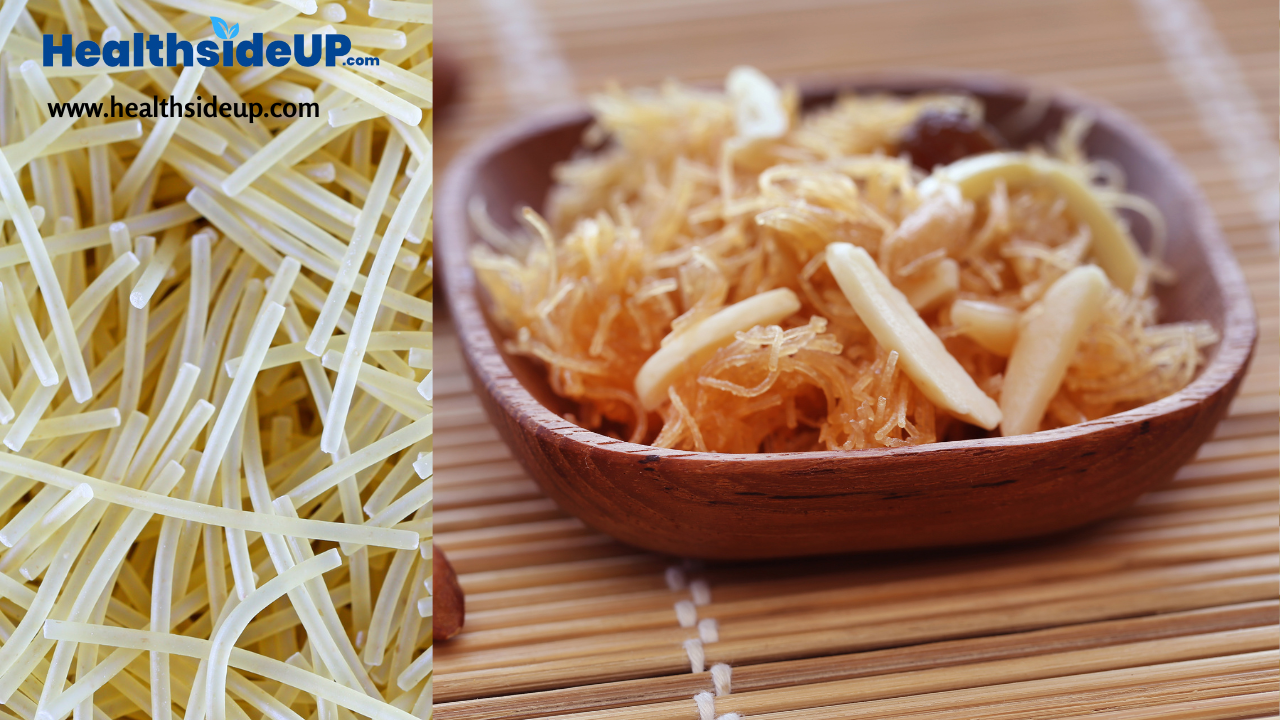
Wholesome Delight : Wheat Vermicelli
Wheat vermicelli, also known as wheat noodles or semolina noodles, is a type of pasta made from wheat flour. It is commonly used in various cuisines for making noodle dishes, soups, and salads. Nutritional contents of wheat vermicelli are as follows.
Culinary Variety: It can be used in both savory and sweet dishes, offering culinary versatility for a range of preferences. Such as Kheer, pudding, buklawa, Sevai Upama and much more.
Nutritional Content:
Wheat vermicelli is a good source of carbohydrates, providing energy for the body.
It contains a moderate amount of protein, contributing to muscle repair and growth.
While not as high in fiber as whole wheat alternatives, wheat vermicelli does contain some dietary fiber, promoting digestive health.
It is relatively low in fat, making it a lighter option compared to some other pasta varieties.
Wheat vermicelli provides small amounts of various B-vitamins, including thiamine, niacin, and riboflavin, which play roles in energy metabolism.
It contains minerals such as iron, magnesium, and phosphorus, contributing to overall nutrient intake.
Health Benefits:
The carbohydrates in wheat vermicelli serve as a quick and efficient source of energy, making it suitable for individuals with active lifestyles.
While not as protein-rich as some other sources, wheat vermicelli does contribute to daily protein intake, supporting muscle function and overall body maintenance.
Wheat vermicelli is a versatile ingredient that can be used in various recipes, including stir-fries, soups, salads, and casseroles.
Wheat vermicelli typically has a shorter cooking time compared to traditional pasta, making it a convenient option for quick and easy meals.
The presence of dietary fiber can support digestive health by promoting regular bowel movements and preventing constipation.
For those watching their fat intake, wheat vermicelli is a suitable choice as it is relatively low in fat.
Wheat vermicelli pairs well with vegetables, allowing for the incorporation of nutrient-rich ingredients into your dishes.
It’s essential to be mindful of portion sizes and to balance wheat vermicelli with a variety of other food groups to ensure a well-rounded and nutritious diet. Additionally, individuals with gluten sensitivity or celiac disease should opt for gluten-free alternatives.
When incorporating wheat vermicelli into your diet, consider pairing it with a variety of vegetables, lean proteins, and healthy fats to create balanced and nutritious meals.


